
Case Study 1
Effective Long-term Treatment for Emotionally Unstable Personality (Borderline Personality Disorder)
Ms. P, a 26-year-old woman, sought support from Psypathology due to significant emotional instability, frequent mood swings, impulsive behaviour, self-harming tendencies, unstable relationships, and chronic feelings of emptiness. She described her situation during the initial consultation as follows:

Before visiting our centre, Ms. P underwent shorter-term therapy (approximately 8 sessions) with other mental health providers, but these brief interventions failed to produce lasting improvements in her emotional well-being or quality of life.
At Psypathology, Ms. P underwent a comprehensive clinical assessment and was diagnosed with an Emotionally Unstable Personality, commonly referred to as Borderline Personality Disorder (BPD). The detailed psychological evaluation highlighted her pronounced challenges in managing emotional responses, impulse control, interpersonal relationships, and maintaining a stable self-image.
Acknowledging the complexity and depth of Ms. P’s emotional difficulties, our clinical psychologists at Psypathology carefully designed an individualized, evidence-based treatment plan emphasizing structured, consistent, and supportive therapeutic interventions over an extended period of 6 to 9 months. This personalized approach significantly contrasted with the brief interventions previously attempted, ensuring sustainable and meaningful psychological improvement.
The therapeutic journey began with building a foundation of trust, emotional awareness, and self-understanding during the initial two months, setting the stage for effective emotional learning. Over the following months (3-4), Ms. P made remarkable progress in managing emotional responses, reducing impulsive behaviors, and substantially improving her interpersonal interactions. By months five and six, therapeutic sessions deepened her self-awareness, identity stability, and adaptive coping mechanisms, leading to a substantial reduction in self-harming behaviors.
The final therapeutic stage (months 7-9) focused on consolidating these improvements, reinforcing healthy coping strategies, and preparing Ms. P to maintain these significant gains independently. Upon completion of her structured therapy at Psypathology, Ms. P demonstrated notable emotional stability, elimination of self-destructive behaviors, improved relational functioning, enhanced self-esteem, and greater independence in managing everyday life stressors.
This case underscores the critical importance of sustained, structured, and compassionate psychological interventions when treating complex emotional conditions such as emotionally unstable personality disorders. At Psypathology, we prioritize authentic, long-lasting emotional healing rather than superficial quick-fix solutions, ultimately enabling our clients to achieve true psychological wellness and significantly enhanced quality of life.
We encourage potential clients to approach quick-fix therapeutic promises with caution. Genuine emotional recovery requires thoughtful, structured intervention, dedication, and professional guidance. At Psypathology, we remain committed to providing comprehensive mental health support, ensuring meaningful and lasting emotional stability for each client.
Case Study 2
Comprehensive Therapeutic Approach for Conduct Disorder
Master A, a 13-year-old boy and an only child, was brought to Psypathology, due to persistent behavioral issues, defiant attitudes, aggression, frequent rule-breaking, and conflicts at school and home. Master A had been previously referred to brief counseling sessions (6-8 sessions) at other clinics, but these short-term interventions provided minimal improvement and failed to address underlying issues effectively.
During the initial comprehensive psychological assessment at Psypathology, Master A was diagnosed with Conduct Disorder, characterized by a consistent pattern of antisocial behaviors, defiance of authority, difficulty following rules, and impulsive aggression.
The parents described their struggle vividly during the initial consultation:

Recognizing the complexity and severity of Master A’s behavioral difficulties, Psypathology’s clinical psychologists developed a structured, individualized, evidence-based intervention plan emphasizing consistent therapeutic support and family engagement over an extended period (6-9 months). Unlike previous short-term counseling sessions, our comprehensive approach targeted deep-rooted behavioral patterns and family dynamics.
Therapeutic goals included reducing aggressive and disruptive behaviors, fostering better emotional regulation, enhancing impulse control, improving family communication, strengthening social skills, and rebuilding a healthy parent-child relationship.
During the initial phase (months 1-2), therapy focused on establishing trust with Master A, understanding his triggers, and providing psychoeducation to parents regarding conduct disorder and effective behavioral management strategies. In months 3-4, significant progress was observed in reducing aggressive outbursts, enhancing compliance with family rules, and decreasing school-related incidents.
Months 5-6 emphasized deeper emotional awareness, improved coping strategies for frustration, anger management techniques, and fostering positive peer relationships. This phase also saw a substantial improvement in the quality of parent-child interactions. By months 7-9, Master A exhibited consistent behavioral stability, increased respect for authority, better adherence to rules, and improved academic performance.
Upon completion of the therapeutic intervention at Psypathology, Master A displayed considerable behavioral improvement, enhanced emotional control, and healthier family dynamics. His parents reported a significant improvement in their overall family atmosphere, reduced conflicts, and greater mutual understanding.
This case highlights that effective treatment of Conduct Disorder requires structured, sustained, and comprehensive psychological intervention rather than superficial or brief approaches. At Psypathology, our dedicated approach ensures meaningful, long-lasting improvements in emotional, social, and family functioning.
We encourage families experiencing similar challenges to approach behavioral interventions with realistic expectations and sustained commitment. Genuine and lasting behavioral change requires structured support, professional expertise, and active family participation. Psypathology remains committed to providing comprehensive care to facilitate meaningful improvements in your child’s emotional well-being and family harmony.
Case Study 3
Navigating Relationship Challenges Arising from Premarital Intimacy
A young couple, Mr. S (28) and Ms. R (26), approached Psypathology, seeking support for growing emotional strain linked to their premarital sexual relationship. After dating for over two years, the couple began experiencing significant tension after marriage, marked by lingering guilt, communication breakdowns, mistrust, and unresolved emotional discomfort rooted in societal expectations and personal values around intimacy.
During their initial consultation, the couple candidly shared the source of their distress:

Comprehensive assessments and in-depth couple interviews revealed that the emotional turmoil was driven by internalized guilt, lack of open dialogue around physical intimacy, conflicting expectations about marriage, and anxiety regarding social judgment. These unspoken concerns were gradually eroding the couple’s emotional connection.
Understanding the sensitivity of the issue, the clinical psychologists at Psypathology designed a tailored and empathetic intervention plan. Over six months, therapy focused on fostering emotional awareness, enhancing communication, rebuilding trust, clarifying relationship boundaries, and supporting the couple in redefining their shared values.
The primary therapeutic goals were to reduce emotional distance, promote forgiveness, restore trust, and encourage healthy, honest discussions around intimacy and expectations. Therapy sessions provided a non-judgmental space where both individuals could reflect, express themselves freely, and reconnect on a deeper emotional level.
In the first two months, therapy focused on emotional validation and psychoeducation around relationship health. As the sessions progressed into the third and fourth months, the couple began communicating more openly, demonstrating increased empathy, and reducing judgment toward each other’s past decisions. By the final phase (months five and six), the focus shifted to reinforcing progress, resolving remaining insecurities, and developing practical strategies for managing social and familial pressures.
At the conclusion of the therapeutic journey, Mr. S and Ms. R reported a renewed emotional bond, deeper understanding of one another, and improved communication. They expressed confidence in their ability to navigate future challenges together with maturity, mutual respect, and emotional clarity.
This case highlights the importance of addressing sensitive relational issues with honesty, compassion, and professional guidance. At Psypathology, we understand the deep emotional impact that unresolved past experiences and societal pressures can have on modern relationships. Our structured, client-centered approach empowers couples to strengthen their bond, resolve emotional conflicts, and build resilient, meaningful partnerships.
We encourage couples facing similar concerns to seek timely support. Healthy relationships thrive not by avoiding the past, but by understanding it together—with care, commitment, and expert psychological support.
Case Study 4
Treating Depression and Learned Helplessness in a Young Adult with Chronic Health Conditions
Background –
Mr. A, a 24-year-old male, was referred to Psypathology after a prolonged history of emotional withdrawal and persistent low mood. Despite receiving ongoing medical care for type 2 diabetes, hypothyroidism, and frequent fatigue, his emotional health had been consistently overlooked. Over time, he began exhibiting signs of major depressive disorder, marked by social isolation, tearfulness, lack of motivation, and a deep sense of hopelessness.
He had been consulting various specialists for years, but no clear psychological diagnosis had ever been made. His emotional suffering was often dismissed as a “side effect” of physical illness, leaving his distress unaddressed and unacknowledged.
Presenting Complaint (Family Statement):

Clinical Understanding and Challenges:
By the time Mr. A arrived at Psypathology, he was emotionally fragile and functionally disengaged from daily life. The long delay in psychological recognition, combined with the burden of chronic illness at a young age, had led to a classic pattern of learned helplessness, where he no longer believed he could influence his health or emotional state. This made therapy particularly delicate, as even small tasks felt overwhelming to him.
He met the criteria for major depressive disorder, with comorbid physical health issues, characterised by persistent sadness, emotional shutdown, hopeless thinking, and marked behavioural passivity.
Therapeutic Approach:A gentle, holistic therapeutic plan was designed that integrated the following modalities:
Behavioural Activation to reintroduce structured daily activities and reduce emotional inertia.
Supportive therapy provides a safe space for emotional expression and validation.
Mindfulness Techniques to help him manage ruminative thoughts and bodily discomfort.
Motivational Interviewing to address his lack of self-belief and build internal motivation gradually.
Sessions were paced according to his energy and engagement levels, avoiding pressure while promoting consistency.
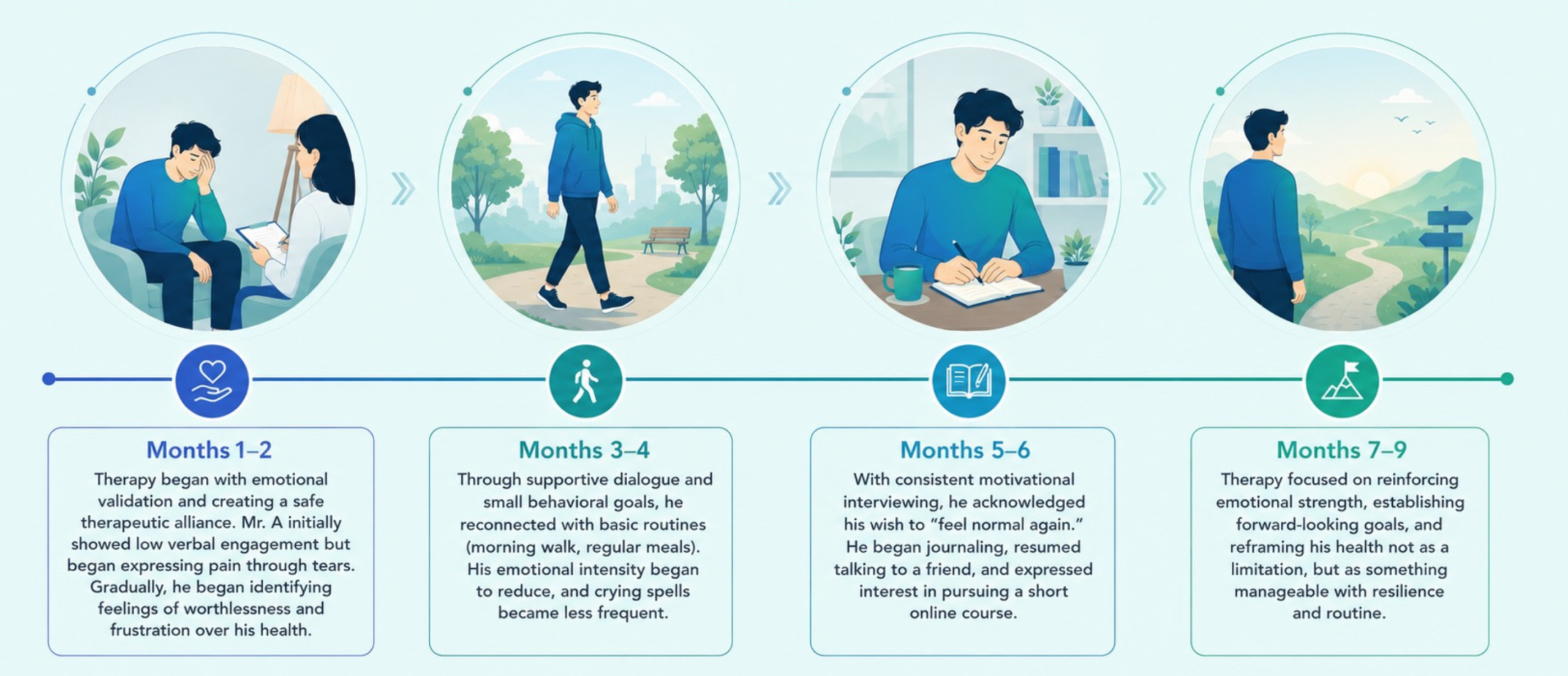
Progress and Response:
Outcome :
By the end of nine months, Mr. A exhibited substantial improvements: he became more communicative, his emotional stability increased, crying episodes reduced significantly, and he started taking ownership of his daily health and life decisions. His family reported a visible change in his energy and engagement with the world around him.
Conclusion :
This case illustrates how undiagnosed depression in young adults with chronic health conditions can lead to severe emotional decline. However, with the right mix of behavioral activation, mindfulness, supportive therapy, and motivational guidance, healing is possible—even after prolonged suffering. At Psypathology, we’re committed to addressing such complex cases with compassion, structure, and personalised care.